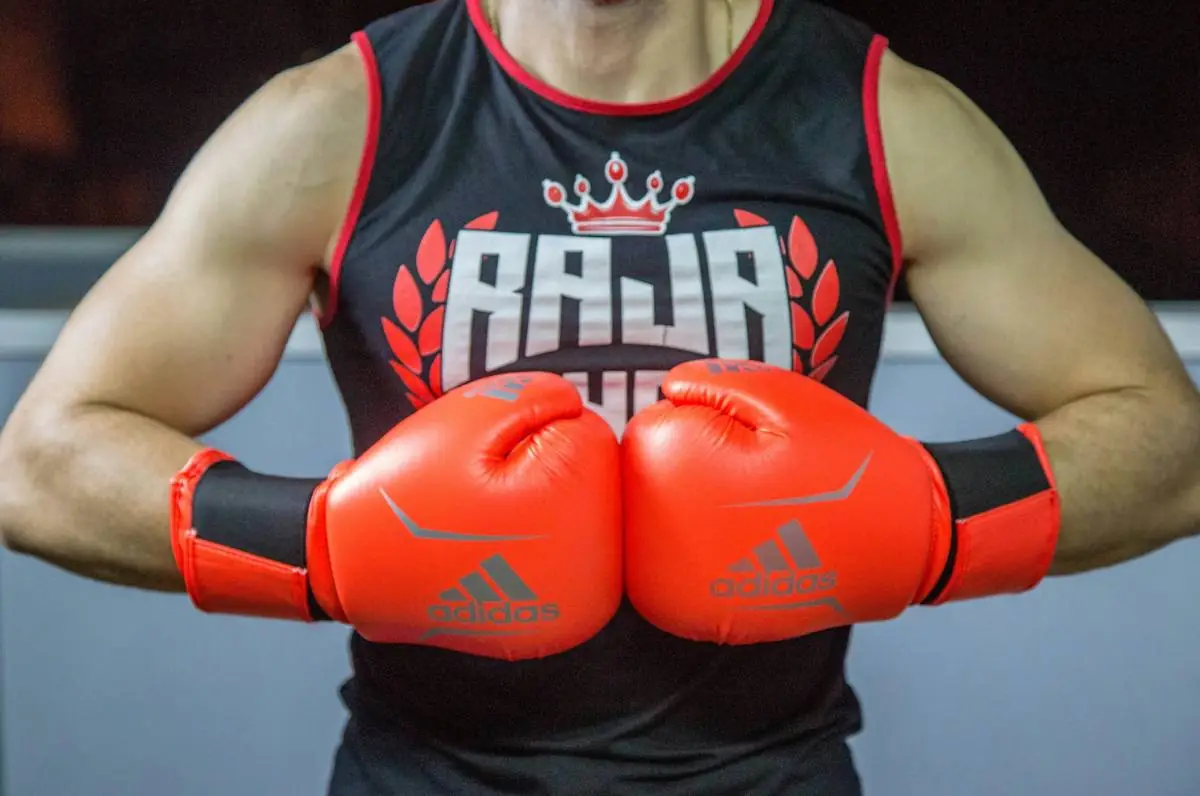
| What it is | The ritual every fighter performs before a traditional Muay Thai fight |
| Wai kru means | "Paying respect to the teacher" |
| Ram muay means | "Boxing dance" |
| Who it honours | Teachers, parents and the fighter's faith |
| Music | Sarama: Thai oboe, drums and small cymbals, played live |
| Headband | The mongkhon, put on and taken off by the trainer |
What does wai kru ram muay mean?
The name is four Thai words:
- Wai (ไหว้): the Thai gesture of respect, palms pressed together.
- Kru (ครู): teacher. It comes from the Sanskrit word guru, and is also spelled khru.
- Ram (รำ): dance, in the classical Thai style.
- Muay (มวย): boxing.
Put together, it means something like "the boxing dance that pays respect to the teacher". Most people just say wai kru.
The ritual has two parts. The wai kru is the act of respect: the fighter kneels and bows to honour the people who made them. The ram muay is the dance that follows, a set of slow movements that each camp teaches in its own style.
Why do fighters do it?
- Gratitude. In Thailand a kru is far more than a coach. The wai kru thanks the teacher who passed on the art, along with the fighter's parents and ancestors.
- Protection. The ritual asks for safety in the ring, for both fighters.
- Preparation. It's also a practical warm-up. The slow movements stretch the hips and legs, steady the breathing and calm the nerves.
- Reading the ring. Walking the ropes lets a fighter feel the canvas, the corners and the crowd before the first bell.
- Identity. Every gym's ram muay is a little different, so fans can often tell where a fighter trains from the dance alone.
The wai kru step by step
Versions differ from camp to camp, but most follow the same order.
- Entering the ring. The fighter arrives wearing the mongkhon (headband) and prajiad (armbands), and bows before stepping in. Traditionally fighters step over the top rope, because the head is considered the most sacred part of the body.
- Sealing the ring. With one glove on the top rope, the fighter walks around the ring, pausing at each corner to bow or say a short prayer. This "seals" the ring against bad luck and outside forces.
- The three bows. In the centre, usually facing their own corner or the direction of home, the fighter kneels and bows to the canvas three times. The bows are most often explained as respect for parents, teachers and the Buddha, or for the Buddha, his teaching and the monks.
- The kneeling dance. Still on the knees, the fighter begins the ram muay: slow, flowing arm movements, rocking back and forth in time with the music.
- The standing dance. The fighter rises and moves around the ring with measured steps, often repeating the same sequence to all four sides.
- Back to the corner. The trainer says a short prayer, lifts off the mongkhon, and the fight can begin.
In the big Bangkok stadiums the whole thing takes a few minutes. At smaller shows with long fight cards, fighters are often asked to keep it short: seal the ring, bow three times, done.
Ram muay movements and what they mean
You won't see all of these in every dance, and names and spellings vary, but these are the classics:
| Movement | What it looks like | What it means |
|---|---|---|
| Thep Phanom | Kneeling upright, palms together at the chest | Honouring the guardian spirits of the camp and asking for their protection |
| Pathom | Leaning forward and back from the knees, one leg extended | "The first" dance, performed in honour of the teacher |
| Phrom Si Na | The same sequence repeated to all four sides of the ring | Named after Brahma, the four-faced god, and showing respect in every direction |
| Yang Sam Khum | A slow three-step walk with the fists rolling in front of the chest | "The three strides": a measured way to cover the ring |
| Hong Hern | Arms spread wide like wings, balancing on one leg or knee | The flying swan, a show of grace and balance |
| The archer | Drawing an imaginary bow and aiming at the opponent's corner | From the story of Rama shooting his arrow. A playful warning to the other fighter |
Many of the movements are said to come from Hanuman, the monkey warrior of the Ramakien, Thailand's national epic.
The mongkhon and prajiad

Two items are part of every wai kru:
- The mongkhon (also mongkol) is the headband. It belongs to the gym, not the fighter. The trainer blesses it and places it on the fighter's head before the walk to the ring, and lifts it off after the ritual. A fighter doesn't put it on themselves.
- The prajiad are the armbands, worn throughout the fight for luck and protection. Traditionally they were made from a strip of cloth given by the fighter's mother.
Both are treated as sacred. A mongkhon is never put on the floor or stepped over. That's also why you won't find a real one in our guide to buying Muay Thai shorts and gloves in Thailand: it's something you're given, not something you buy for yourself.
Sarama: the music of the wai kru
The wai kru is performed to sarama, the traditional music of Muay Thai. A small live band sits ringside and plays three kinds of instrument: a reedy Thai oboe (pi), a pair of hand drums (klong khaek) and small cymbals (ching).
During the wai kru the music is slow and winding. Once the fight starts, the band keeps playing and speeds up round by round, pushing the fighters to match its pace. If you've only watched Muay Thai on a screen with the sound down, hearing it live is a big part of the experience.
Where does the wai kru come from?
Its roots are older than the sport. Warriors of old Siam asked for blessings and protection before battle, and as Muay Thai moved from the battlefield to the ring, the ritual stayed and turned its focus to the teacher.
The most famous story is that of Nai Khanom Tom. According to legend, he was taken prisoner when the Burmese sacked Ayutthaya, and in 1774 was made to fight before the Burmese king. He performed his wai kru first, then beat ten opponents in a row and won his freedom. He's remembered as the "father of Muay Thai", and 17 March is Nai Khanom Tom Day.
Every year around that date, the Tourism Authority of Thailand holds the World Wai Kru Muay Thai Ceremony among the temple ruins of Ayutthaya, on 16–17 March. Fighters from dozens of countries perform the wai kru together and receive a blessed mongkhon from Thai masters. The 2019 ceremony drew more than 1,500 practitioners from 70 countries.
How fighters learn the wai kru
Nobody learns it from a book. A fighter's kru teaches it move by move, the same way it was taught to them, which is why each camp's version looks a little different.
- Thai fighters usually learn it as children, alongside their first kicks and knees.
- Foreign students are normally taught it when they're getting ready for their first fight in Thailand. Ask your trainer. Most are happy, even proud, to teach it.
- Start simple. Sealing the ring and the three bows are enough for a first fight. A longer ram muay can come later.
- Practise it like any other technique. A wai kru done badly looks worse than a short one done with care. Balance on the knees is harder than it looks.
Training at one of the top camps in Thailand is the natural place to learn it properly, from someone who has performed it in the ring.
Do foreign fighters have to do it?
At traditional shows in Thailand, yes: it's expected, and it's appreciated. Nobody expects a visitor to perform a five-minute dance, and the short version is fine. What matters is doing it sincerely.
It isn't tied to one religion. Fighters of every faith perform it, and many say their own prayer during the three bows. Think of it as a thank-you to the people who taught you.
The wai kru today
Not every promotion gives it the same room. Some made-for-TV shows have cut the wai kru to a fraction of its length to keep the broadcast moving. Others, such as the Rajadamnern World Series, have gone the other way and explain the ritual to new audiences as part of the show. Fighters known for a beautiful wai kru are still celebrated for it, and there are awards for the best.
Where to see a wai kru, and how to watch it
- Bangkok: Rajadamnern and Lumpinee are the best places to see it done properly. See our guide to Bangkok's Muay Thai stadiums.
- Phuket: every fight at the Patong stadiums starts with one. See where to watch Muay Thai fights in Phuket.
- Ayutthaya: the World Wai Kru ceremony each March, about an hour north of Bangkok.
As a spectator, the etiquette is simple. Be in your seat before the fighters enter, watch quietly, and don't treat it as a break before the action starts. For the fighters, this is the part that matters most.
Want to follow what the corner and the crowd are shouting once the fight begins? See our Muay Thai glossary.
Frequently asked questions
What does wai kru mean?
Wai kru means "paying respect to the teacher". Wai is the Thai gesture of respect and kru means teacher. The full name, wai kru ram muay, adds ram (dance) and muay (boxing).
What is the difference between wai kru and ram muay?
The wai kru is the act of respect: the fighter seals the ring, kneels and bows three times. The ram muay is the dance that follows, with movements that differ from camp to camp. Together they make up the pre-fight ritual.
Why do Muay Thai fighters wear a headband?
The headband is called a mongkhon. It belongs to the gym, is blessed and placed on the fighter by the trainer, and is worn only for the walk to the ring and the wai kru. The trainer removes it before the fight.
What is the music played during the wai kru?
It's called sarama. A live band plays a Thai oboe, hand drums and small cymbals. The music is slow during the wai kru and gets faster as the fight goes on.
Do foreigners have to perform the wai kru in Thailand?
At traditional shows it's expected. A short version, sealing the ring and bowing three times, is perfectly acceptable for a first fight. Your trainer will teach you.
How long does a wai kru take?
Usually a few minutes. At smaller shows with long fight cards, fighters often shorten it to sealing the ring and the three bows.
Is the wai kru religious?
It grew out of Thai Buddhist and older spiritual traditions, but it isn't tied to one faith. Fighters of all religions perform it as a sign of respect and gratitude to their teachers and families.
Sources
- YOKKAO: Wai Khru Ram Muay
- Rajadamnern Stadium: Muay Thai wai kru, meaning and history
- Bangtao Muay Thai & MMA: the significance of wai kru and ram muay
- Evolve MMA: understanding the wai kru ram muay
- Fairtex: the cultural significance of Muay Thai (kru, mongkhon, prajiad)
- Wikipedia: Wai khru ram muay
- Bangkok Post: a celebration of all things Muay Thai (Nai Khanom Tom, World Wai Kru ceremony)
- TAT News: 15th World Wai Kru Muay Thai Ceremony attracts record numbers
- TAT News: 17th World Wai Kru Muay Thai Ceremony, 16–17 March 2025
Updated November 2026. Prices and schedules change, so check with the camp or venue before you book.

June Perang is a Muay Thai trainer with 10+ years of competing. He has no ties to any gym listed here. Read more →